
Finding balance between convenience and presence in modern yoga practice…
If you’ve been following along since my website launch and my journey through articles like Move to Remember: A Somatic Approach and The Magic in the Middle: Why Transitions Matter, you already know how much I value the space between effort and ease, between moving forward and being still.
That same philosophy applies when it comes to technology in yoga.
In my last article, we explored how hybrid yoga offers the flexibility to practice anywhere, at any time. But there’s another side to this story. A side that asks: How can we stay connected to our inner stillness when our screens are constantly calling for our attention?
Presence in a Digital World
It’s easy to celebrate the convenience of digital tools, online classes, tracking apps, meditation timers, and virtual workshops. They’ve opened doors for connection, learning, and accessibility like never before.
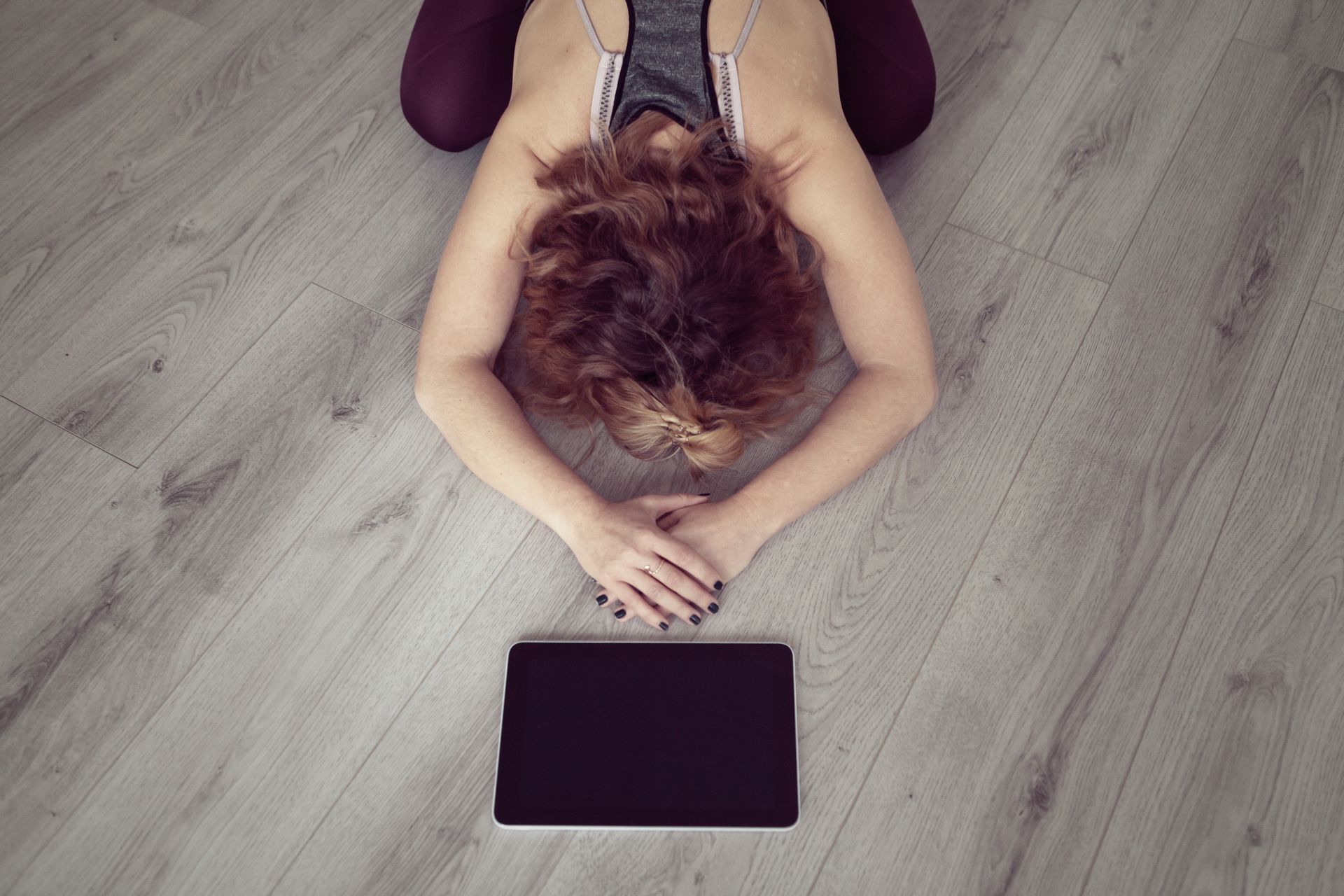
Yet, I’ve also found myself mid-practice, suddenly aware that my phone was nearby blasting with notifications, tempting me to check “just one quick thing.” The moment I glance away from the mat, I’m no longer in my body and rather wrapped up in my phone. This is where the real practice begins, not just mastering balance poses, but finding balance with our tools.
Technology as a Modern Mudra
Rather than rejecting technology, I’ve learned to treat it like a mudra; that is a mindful gesture holding intention. The way we use digital tools can either distract our attention or deepen our focus, depending on how we hold them.
Here are a few mindful ways I’ve been blending technology into my practice without letting it take over:
1. Set Sacred Boundaries
Before beginning my flow, I place my phone on Do Not Disturb. I create a digital ritual, whether that's lighting a candle, setting a playlist, and then stepping away from my screen. This signals to your nervous system that it's time to arrive.
2. Use Tech for Intention, Not Distraction
Apps and online platforms can enhance your practice, but only if they serve your purpose. I often revisit sequences that track gentle flows that align with the power of gentle yoga. The key is to let the technology guide you toward embodiment, not away from it.
3. Stay Connected, Not Scattered
Digital communities, like those built around hybrid studios, can be beautiful spaces for accountability and inspiration. But remember: connection happens through presence, not constant scrolling. When you join a virtual class, treat it like walking into a real studio with your full attention, openness, and gratitude.
Finding the Zen in the Zoom
During one of my online classes, I noticed how the camera framed my body differently than a mirror would. At first, it felt awkward but then, I began to see it as a teacher in its own right. The lens reflected not just alignment, but awareness. It reminded me that the real “Zoom” isn’t the software, it’s the act of zooming inward.
A Practice of Digital Discernment
In yoga philosophy, the niyama of santosha (contentment) invites us to find peace with what we have, even our tech tools. We can appreciate their benefits while remaining unattached to constant connectivity.
So, next time you open your yoga app, attend a virtual class, or even read a post like this one, pause. Take a slow breath. Notice the light of the screen reflecting off your skin. Let that be your reminder: presence is portable.
Whether you’re streaming a sunrise flow or practicing offline in quiet solitude, your yoga doesn’t depend on Wi-Fi, it depends on awareness.
Coming Back to Stillness
Digital tools can support your practice but only if they remain tools, not temptations. Just like the balance between sthira (steadiness) and sukha (ease), the dance between technology and mindfulness is one we keep refining.
Let’s keep learning how to meet modern life with ancient wisdom, one mindful click and one conscious breath, at a time.

More reflections from the mat, the heart, and beyond.