

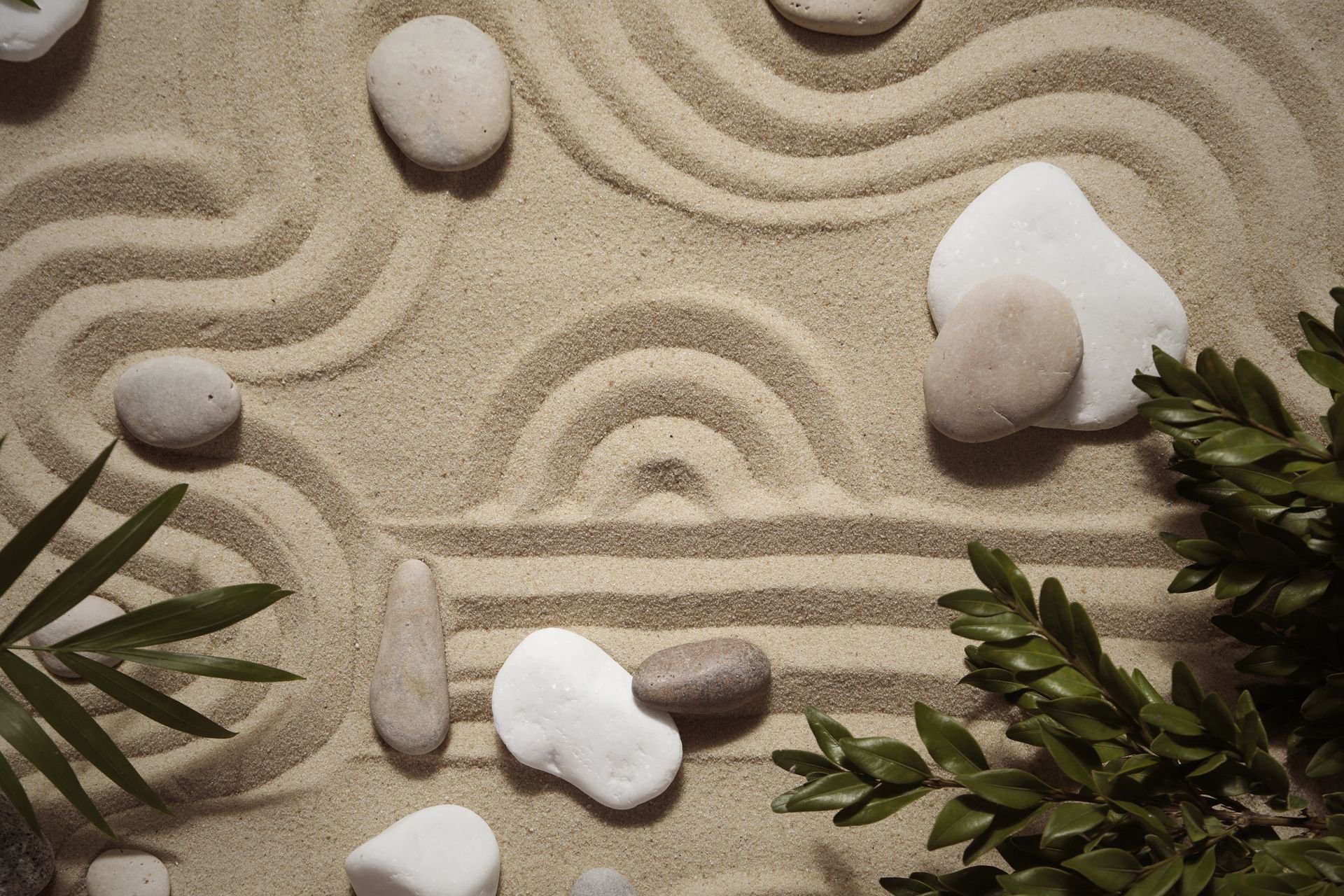
You don’t need much to find peace - just a little space and mindful intention...
In a world that often pulls us in every direction, a Zen garden offers the opposite: stillness, simplicity, and space to return to yourself. Inspired by centuries of Japanese tradition, these quiet landscapes are not just about design but intention. They're places of presence.
A Brief History Rooted in Presence
Zen gardens, also known as karesansui or "dry landscape gardens," originated in Japan’s Muromachi period. Created by Zen Buddhist monks, these gardens weren’t built for decoration - they were tools for meditation. Instead of depicting nature directly, they suggested it: rocks symbolized mountains, raked gravel suggested water, and open space became as meaningful as the elements within it.
Over time, this minimalist expression of the natural world became an art form rooted in philosophy, one that continues to invite calm and clarity today.
Why Create a Zen Garden?
A Zen garden isn’t meant to impress - it’s meant to ground. It becomes a visual meditation, helping you focus, breathe deeper, and feel more connected to the moment.
Creating one allows you to:
- Cultivate a personal ritual of stillness
- Gently reduce mental clutter
- Introduce a calming visual rhythm into your environment
- Build something meaningful with your hands
Whether large enough to walk through or small enough to fit on your desk, a Zen garden becomes a mirror for your inner landscape.
The Essentials - and Why They Matter
Rather than copying a traditional layout, understand the symbolism behind the materials so you can build something that speaks to you.
Rocks - More than decoration, rocks represent permanence - mountains, islands, the immovable truths of life. Their placement is carefully considered for balance, not symmetry.
Gravel or Sand - Raked into lines or spirals, the gravel mimics flowing water. The raking isn’t just aesthetic - it’s meditative. Each motion reflects the state of the person holding the rake.
Space - Intentional emptiness in Zen gardens creates balance and invites contemplation. What’s not there is just as important as what is.
Natural Additions - Moss, a single bonsai, or a simple lantern can enhance the space without crowding it. Restraint is part of the practice.
Boundaries - Low walls or wooden frames define the space, helping your mind treat it as sacred and separate, even if it’s only a tabletop version.
A Simple Zen Garden, Your Way
You don’t need a temple courtyard or traditional training. A grounding Zen garden can begin with just a few pieces:
- A tray or shallow box
- White or natural-colored sand
- A few meaningful stones or pebbles
- A small rake or even a chopstick to shape the sand
Place it where you’ll see it often. Let it become part of your ritual - something to return to when the world feels too fast.
An Invitation to Stillness
We believe that mindfulness doesn’t require perfection - only presence. If you're curious on where to start, you don't have to figure it out alone.
Feel free to reach out or follow along for more ideas and inspiration as you begin creating your own space for stillness.
You’re also welcome to check out my own Zen garden at home in this Facebook reel and see how simple moments can create a peaceful sanctuary.

More reflections from the mat, the heart, and beyond.